Thursday, April 8, 2010

How to change your OSX terminal color for ssh sessions

Sometimes I have lots of terminal windows open for ssh sessions to multiple machines. It can all be a bit confusing even if I use the remote machine name in the shell prompt. So I got terminal colorization working for me with help from here and here.
There is a default color for all screens that are using ssh and you can also customize the colors for different remote machines. When you end the ssh session, the terminal returns to black on white.

This is for OS X because it uses the osascript command to change the colors but the rest of the shell script should be just fine for Unix.


$ cat /usr/local/bin/ssh
#!/bin/sh

# Color the OSX Terminal app according the hostname used in ssh
# Assumes you log in with a simple "ssh myuserid@remotehost"
# Place in a directory such as /usr/local/bin that is before the real ssh location

# The value of whatever was after the @ in the command
HOSTNAME=`echo $@ | sed s/.*@//`

set_bg () {
osascript -e "tell application \"Terminal\" to set background color of window 1 to $1"
}

set_text () {
osascript -e "tell application \"Terminal\" to set normal text color of window 1 to $1"
}

# Return to black text on white background
on_exit () {
# echo exited
set_bg "{65535,65535,65535}"
set_text "{0, 0, 0}"
}
trap on_exit EXIT

# My color names
# green 10000,40000,40000
# blue 10000,20000,60000
# orange 60000,40000,00000
# red 60000,00000,00000
# yellow 60000,60000,40000

case $HOSTNAME in
fisheye) set_bg "{60000,60000,40000}" ; set_text "{0,0,0}" ;;
jira|jira2) set_bg "{10000,40000,40000}" ; set_text "{0,0,0}" ;;
# unused colors follow
# blue) set_bg "{10000,20000,60000}" ; set_text "{65535,65535,65535}" ;;
# orange) set_bg "{60000,40000,00000}" ; set_text "{0,0,0}" ;;
# red) set_bg "{60000,00000,00000}" ; set_text "{0,0,0}" ;;
# yellow) set_bg "{60000,60000,40000}" ; set_text "{0,0,0}" ;;
# gray) set_bg "{60000,57000,55000}" ; set_text "{0,0,0}" ;;
*) set_bg "{60000,57000,55000}" ; set_text "{0,0,0}" ;;
esac

/usr/bin/ssh "$@"

Wednesday, March 31, 2010

There's a way to do that in emacs

Given a number of lines of text such as

foopy charlie
foo bravo
food alpha

and you want to sort them by their second field so they end up like

food alpha
foo bravo
foopy charlie

the right emacs incantation is:

C-u 2 M-x sort-fields

That's all.

Monday, March 29, 2010

Michelle Shocked concert

Katherine and I went on our yearly pilgrimage to Moe's Alley to see Michelle Shocked last Saturday. Steve Wozniak was there too, quietly enjoying this tiny "Reggae Pub". As ever, Michelle was truly amazing. Her energy, her humility and that soaring voice. Mostly her older songs, but with lots of local guests and backing from a band lead by James Nash who just smoked that guitar!

As Michelle says of herself,

I've been through some dark times but I've experienced joy too. Now that joy can't be suppressed.

Thursday, March 18, 2010

97 Things Every Programmer Should Know


Another useful book in the "97 Things" series from O'Reilly has been published, this time for programmers. My contribution is "How To Use A Bug Tracker". There are more details at O'Reilly and Amazon.

This book was created by each person adding their contributions to a Wiki, where it was edited and discussed. The whole process worked really well due to the editor, Kevlin Henney.

p.s. My photo on the cover is four rows down, third from the left, just in case you're looking.

Wednesday, March 17, 2010

Ambiguity everywhere

I use emacs for writing code, which is considered a bit old-school by many Java programmers. One of them recently commented that "watching someone use emacs is like watching ballet". Was that a compliment or not? "Graceful" and "efficient" come to mind, but maybe he just doesn't like watching ballet.

Wednesday, March 10, 2010

One of those mornings

6am. Our eldest child woke me from my slumbers with "Daaaad, the toilet's overflowed!". Turns out it had thoroughly clogged itself late last night and then a leaky tank valve had allowed water to gradually drip into the bowl overnight. Ugg. However, the rather questionable design of many American low-flush toilets is not the point of this post. In the process of clearing the clog I realized that this was where an education comes in useful. I asked her to flush another toilet in the house which created a partial vacuum in the sewer line and helped my efforts with the plunger. It worked wonderfully! A discussion of the physics involved ensued, but the best bit was seeing my daughter continue to believe that her Dad could fix anything.

Wednesday, December 23, 2009

Which letters are never doubled in English words?

There is now a handy website for searching an English dictionary using regular expressions. It appears that the only letters that are never doubled are 'j', 'q', and 'x'. Mind you, you have to go to Uzbekistan to get their unit of currency which is named a "tyyn".

Perhaps I should make up a word such as "sajjaqquixx" to fix the missing ones. I'm not sure what it means yet, and neither is Google. Suggestions welcome.

Happy Christmas,

~Matt

Tuesday, December 8, 2009

Testing, testing


This log post should also appear on my Facebook page, along with a picture of our house as it was in 1948.

Thursday, November 19, 2009

Christmas book ideas

I've recently read two different graphic novels that I've been very impressed by. I recommend both of them for smart teens and older.

Logicomix, Apostolos Doxiadis and Christos Papadimitriou

The story of Bertrand Russell and his mathematical (and other) passions. An entertaining story with enough of the history of logic to make me think. Beautiful art of Athens too.

Grandville, Bryan Talbot

A well-written steampunk detective story using animals. But it's more than that, lots of references to all sorts of interesting things and people. The art is captivating and left me wanting more of it.

Tuesday, October 27, 2009

BitBake and reusing existing ipkg files

I've spent a few days helping a customer with BitBake, a python-based build tool for embedded systems. One of the distributions that uses BitBake is OpenEmbedded, a "build-every-single-thing-from-source" Linux distro.

The customer had a number of existing ipkg packages and wanted to add them to the BitBake'd image. That turns out to be an undocumented use case, so here's the information to save other people the time we spent.

For a target architecture of armv5te, the recipe file for a package with an ipkg file named mypackage-1.2.0.3-1_armv5te.ipk looks like the code below.


DESCRIPTION = "My Package"
DEPENDS = ""
LICENSE = "GPL"

PN = "mypackage"
PV = "1.2.0.3"
PR = "1"
PACKAGES = "${PN}"

# Just fetch and place the ipkg in the correct place to build the rootfs.

# As used in openembedded/classes/image.bbclass via rootfs_ipk.bbclass
PACKAGE_INSTALL_append = ${DEPLOY_DIR_IPK}/armv5te/${P}_armv5te.ipk

SRC_URI = "\
http://ipkg-repository.example.com/subdir/${P}_armv5te.ipk \
"

do_unpack() {
echo "Null unpack method"
}

do_patch() {
echo "Null patch method"
}

do_configure() {
echo "Null configure method"
}

do_compile() {
echo "Null compile method"
}

do_stage() {
echo "Null stage method"
}

do_install() {
oenote Creating directory ${WORKDIR}/install/${PN}
# A directory is needed for each member of PACKAGES
mkdir -p ${WORKDIR}/install/${PN}
}

do_package() {
echo "Null package method"
}

do_package_stage() {
echo "Null package_stage method"
}

do_distribute_sources() {
echo "Null distribute_sources method"
}

do_package_write() {
oenote Copying the downloaded ipkg package from ${DL_DIR} to\
${DEPLOY_DIR_IPK}/armv5te
install ${DL_DIR}/${P}_armv5te.ipk ${DEPLOY_DIR_IPK}/armv5te
}


Version: BitBake 1.8.3

It doesn't look like much by itself, but the work behind it was, er, significant. BitBake and OpenEmbedded have a good number of layers, moderate documentation and great power.


Other tips:

Don't execute BitBake in a subdirectory or it will rebuild the world in a new tmp directory there.

OpenEmbedded apparently doesn't check the return code from the ipkg install commands, so if your files aren't appearing in your image (rootfs) directory, then check their dependencies or run the explicit ipkg command that can be found in the relevant run* command file.

If ipkg asks for user input about overwriting a configuration file, then the OpenEmbedded do_rootfs() function will hang and you will need to kill both the ipkg and bitbake commands manually.

See http://bec-systems.com/web/content/view/79/9/ for more information about adding new packages to images.

Thursday, October 15, 2009

There's no such thing as a unique name

Reading an old post by James Clark about Thai personal names, I wondered how many different names I am addressed by. Surprisingly, I came up with eight.

John Matthew Simon Doar (birth certificate)
Matthew Doar (school name, birth family usage)
Matt Doar (work name)
Matthew Baginski Doar (family name after marriage)
Matthew B. Doar (shortened family name used for publications)
Matthew Baginski (used by systems that can't handle two words in a family name)
J. Matthew Doar (occasional form letters)

and strangest of all is the U.S. Immigration Service who refer to me as "John M. Doar" and once forced me to make up a signature for it on the spot! All I really want these days is to be unique enough for Google.

Friday, October 9, 2009

Handling large numbers of JIRA projects


Once you have a large number of projects in JIRA creating an issue can become a bit tedious, scrolling through the long list of projects to choose just the right one. JIRA (Enterprise edition) already provides Project Categories that you can group projects into, so without further ado, here's a JSP hack to reduce the size of that list of projects by letting you select a project category first.

Installation

The modified file for JIRA 3.13 is createissue-start.jsp and replaces the file of the same name in your JIRA instance. There should be no need to restart JIRA. The usual disclaimers apply, drink responsibly, don't drive and derive etc.

My first build tool question


gnu.misc.discuss


The post above from me in August 1994 asking for help with gnumake reminds me that I never did learn how to use a build tool in college. Fifteen years later, I still don't know the answer to the question that I asked, but I do know that make is still not my favourite build tool.

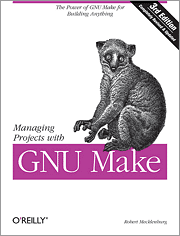
Still, at least the books about Make have improved with John Graham-Cumming's GNU Make Unleashed and Robert Mecklenburg's Managing Projects with GNU Make, Third Edition. That "Third Edition" part is important.

~Matt


Wednesday, September 23, 2009

Should you go to AtlasCamp? Hint: yes!

This post is a friendly sales job for AtlasCamp, the Atlassian developers get-together that's happening October 21-23 in Half Moon Bay, California.

Cons

- Costs a bit of money this year ($200 instead of free)
- er ...
- that's it!

Pros

+ If your company depends on JIRA or Confluence and you've changed them somehow, this is the best place I've found for technical questions
+ Friendly people who write useful code at this conference, not just vapid schmoozing
+ Good presentations about what's changing in the products you depend on
+ Plenty of opportunities to tell the core Atlassian developers and top management exactly what you think of their products

See you there.

~Matt

Thursday, September 3, 2009

She found it 13 years later

Some stuff from old web pages when "Lizi", aka Elizabeth Shardon Baginski Doar, was first born. And indeed she did find them, all by herself, just the other day. I'm not sure she exactly loved it, but it was certainly a surprise!


I was born October 14th 1996 and am much loved by my parents. I like not sitting still and asking "why?". Below is an excerpt from my first email.

>fuukyiki7z x z>8jlj .l[
>'00 uyjkklglylewl;ghju7j

An interesting graph of contraction times during our daughter's birth. I think she'll love this page one day.

Thursday, August 27, 2009

Does this bug tracker make me look whiny?

I submitted a bug about JIRA to Atlassian recently and wondered who reported most of the bugs in their very public database. No surprise, about half of the ones in the last year are from Atlassian employees.

Over the last three years, it's a tie between Neal Applebaum and Sergiy Lizenko (ILS-Ukraine) who each submitted 81 issues, and myself trailing in third place with 39 issues.

~Matt

Tuesday, August 4, 2009

AtlasCamp 2009

AtlasCamp is back, and it's moved to Half Moon Bay. It also costs something this year, but after the great time I had last year I'm looking forward to it.

Wednesday, July 22, 2009

Python Unicode oddness

If you have a Python string with an invalid character for the current character set, then other characters may get removed unexpectedly. For instance:


>>> a = 'FOO\xe0BAR'
>>> print '%r' % a
'FOO\xe0BAR'

>>> print '%r' % unicode(a, 'utf8')
Traceback (most recent call last):
File "", line 1, in
File "/Library/Frameworks/Python.framework/Versions/2.5/lib/python2.5/encodings/utf_8.py", line 16, in decode
return codecs.utf_8_decode(input, errors, True)
UnicodeDecodeError: 'utf8' codec can't decode bytes in position 3-5: invalid data


Fair enough, \xe0 isn't a valid utf8 character. But if I tell the decoder to just ignore any characters it doesn't understand, it also eats the "B" and "A" characters!


>>> print '%r' % unicode(a, 'utf8', 'replace')
u'FOO\ufffdR'
>>> print '%r' % unicode(a, 'utf8', 'ignore')
u'FOOR'


That was unexpected. One day I'm sure someone will explain why it happens to me.

Wednesday, July 1, 2009

Making it easier to maintain JIRA workflows

This is one for JIRA admins.

I've had to track down a few problems recently that were related to fields not appearing on screens, especially when issues were changing their status. The cause turned out to be customized Transition Screens. A Transition Screen is the screen that is shown while you are moving from one status to another, and it's easy to forget which screen goes with each transition.

Sure, you can click on each transition and look for which screen is being used, or you can look at the list of screens and see which transitions used each screen. However, as the number of transitions and screens begins to grow, workflows become harder to maintain. The precision hack shown here helps with this. Click on the image to enlarge and look at the "Transitions" column. Each line has had the text "with the screen "added.


When you view any JIRA workflow with the "View Workflow Steps" screen, the transitions between steps (statuses) now have their screen information shown as well. At a glance, you can now look at a single workflow and see which of your transitions have those troublesome custom transition screens.

The file to change is

atlassian-jira/secure/admin/views/workflow/viewworkflowsteps.jsp
and the modified version can be found here. This was tested with JIRA 3.13.2 and is also a good example of what you can do with JSP if you have to.

Tuesday, June 23, 2009

Remedy - free the attachments!

I've inspected a lot of issue tracking databases in the last few months - JIRA, Bugzilla, TeamTrack, ClearQuest, Trac, GNATS and Remedy1 - but the one I want to consider in this post is Remedy (a.k.a. the "Remedy Action Request System", part of BMC Remedy Service Management from BMC).

Remedy stores attached files in the database and compresses them to save space. That's fine, and they provide a compiled API library to talk to the running server application and extract and decompress the files. But if you're trying to get the data straight from the database, you're out of luck. Searching suggests that the file compression is some proprietary form of zlib but that's it. No source, no algorithm, nothing!

If you're providing an API to extract the data, why not show the customers the source? I suppose they might want to hide changes in the compression algorithm from users, but I can handle seeing that. I'm all for using carefully constructed APIs but not at the cost of the data being locked into one database.

1 I know, I know, you're thinking "wow, those toolsmiths sure do live life in the large!"